SERVICE
Product discovery & opportunity framing

I help bring structure to an opportunity that is still taking shape. Product discovery connects the business ambition with people's needs, explores possible responses and identifies what is worth taking forward.
You can start with a product idea, a difficult customer problem or a brief that leaves important questions open.
We examine what is known, where interpretations differ and which assumptions could change the direction.
The work can combine existing evidence, targeted research, concept development and early prototypes. Opportunity framing brings those inputs into a clear account of the problem and why it is worth addressing. You leave with a more focused direction and a concrete next step, whether that is further investigation, a testable concept or an initial product scope.
FROM UNCERTAINTY TO A PRODUCT DIRECTION
Understand the problem behind the brief
Connect the initial request with the underlying need, business goal and conditions the solution must work within. An initial brief is a starting point for investigation. A request for a new feature may reflect a problem with an existing journey, a commercial opportunity or a process that has become difficult to manage.
Understanding that context helps us assess which response would be useful.
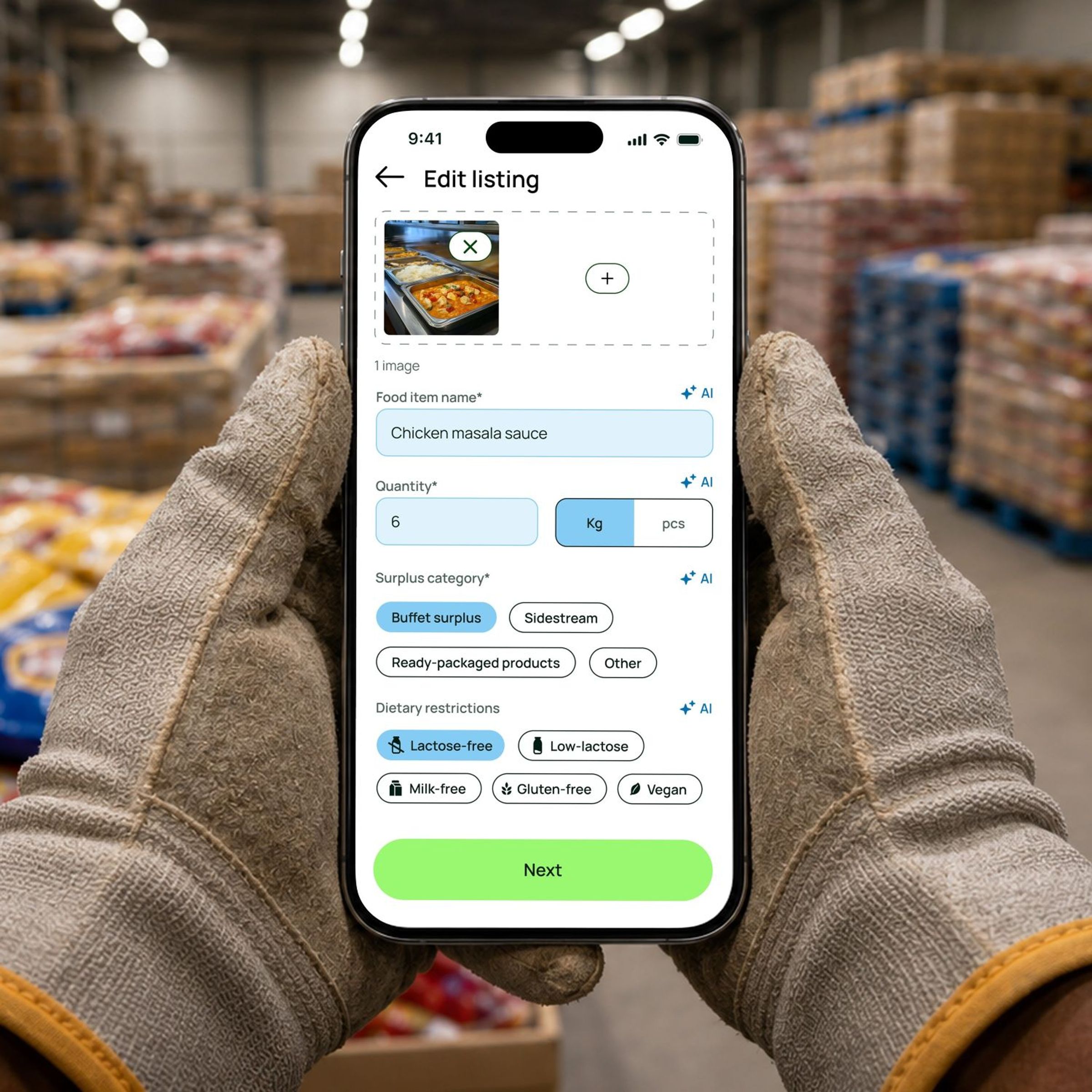
I work with you to clarify the ambition, review available evidence and hear from the people affected. In Zipli, early product work included rescuing food and observing the process before designing the interface. That kind of direct contact helps reveal details a description of the problem can miss, from timing and responsibilities to practical constraints.
Frame a clear opportunity
Define what is worth changing, for whom and what a better outcome would look like. Discovery can produce many observations and ideas. Opportunity framing gives them a useful structure: the need we have identified, the circumstances in which it matters, the people involved and the value of addressing it.
Depending on the brief, I may use a problem statement, a journey, jobs to be done or an opportunity map to make that reasoning explicit. The format follows the decision. We also distinguish evidence from interpretation and retain alternatives where the findings do not yet support a single explanation. This gives the team something specific to agree on, question and develop.
Explore different ways to address it
Develop and compare concepts before committing the project to one particular solution. Once the opportunity is clearer, we can explore different ways to respond. That might include a new product, a change to an existing service, a simpler workflow or a combination of digital and manual support.
I make the alternatives tangible through sketches, scenarios and rough prototypes, so we can discuss how each would work. We compare their relevance to users, business logic and likely delivery requirements. This is also where visual and interaction ideas begin to take shape. The aim is to develop a reasoned preference and expose the assumptions that deserve testing before a larger commitment.
Decide what to test or build next
Turn the preferred direction into a focused experiment, initial scope or brief the team can act on. The next step depends on what remains uncertain. A customer question may need more research.
A confusing interaction may need a prototype test. A critical technical dependency may need a proof of concept. Where the direction is sufficiently established, the work can move into product strategy, UX design or an MVP.
I bring the conclusions into a decision brief with the proposed direction, supporting evidence, open questions and practical priorities. We agree what would count as useful progress and what could change our minds. That makes discovery a foundation for action, with enough clarity for others to contribute.
CASE STUDY

Where should we start?
See contact optionsYour message is on its way. I’ll reply to .
It didn’t go through. Copy your message and send it tohello@mareksevcik.com.